: An Approach Based on Skin Layers
Saeah Lee, MD
Director, Hoan Clinic, Hannam-dong
In consultations, patients often ask whether they can receive a procedure that is currently popular or one that a friend found effective.
However, as I continue with the consultation, I often observe that being famous does not always lead to the same result to everyone. There are cases when a high-satisfaction procedure of someone is not as impressive as expected for another. Then where does this difference come from?
At Hoan Clinic, we approach this question by looking at the skin not as a single surface, but as a structure composed of multiple layers, each with a distinct role.
The skin is not defined only by what we see on the outside. Several layers work together, and depending on which layer is the primary target of treatment, the response can differ significantly—even with the same procedure.
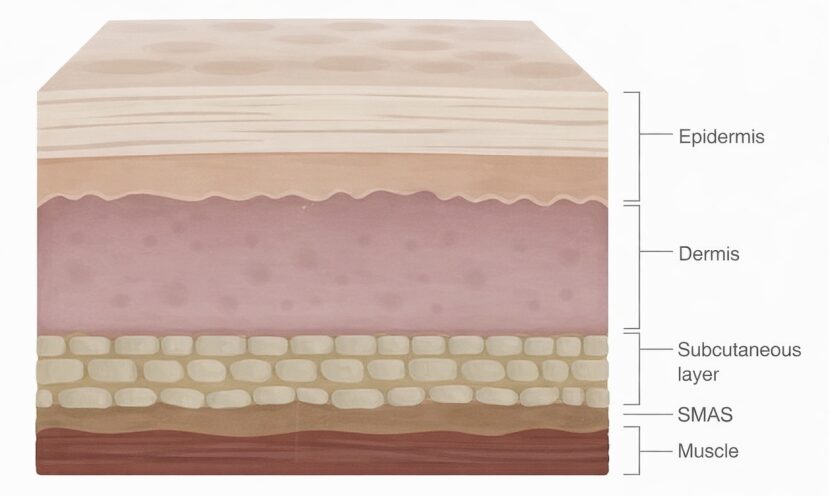
The way the skin is anatomically divided is much more subdivided. However, during the consultation, intuitive criteria are easier to understand than complicated explanations.
For practical and educational purposes, we explain the skin in five layers: the epidermis, dermis, subcutaneous fat layer, fascia (SMAS), and muscle layer. This is not meant as a strict academic classification, but as a framework that helps patients better understand their own skin condition.
When we distinguish whether a concern is about the skin texture, the structural foundation that supports firmness, or in deeper elements such as volume and sagging, it becomes clear why a single method cannot address every issue of your skin.
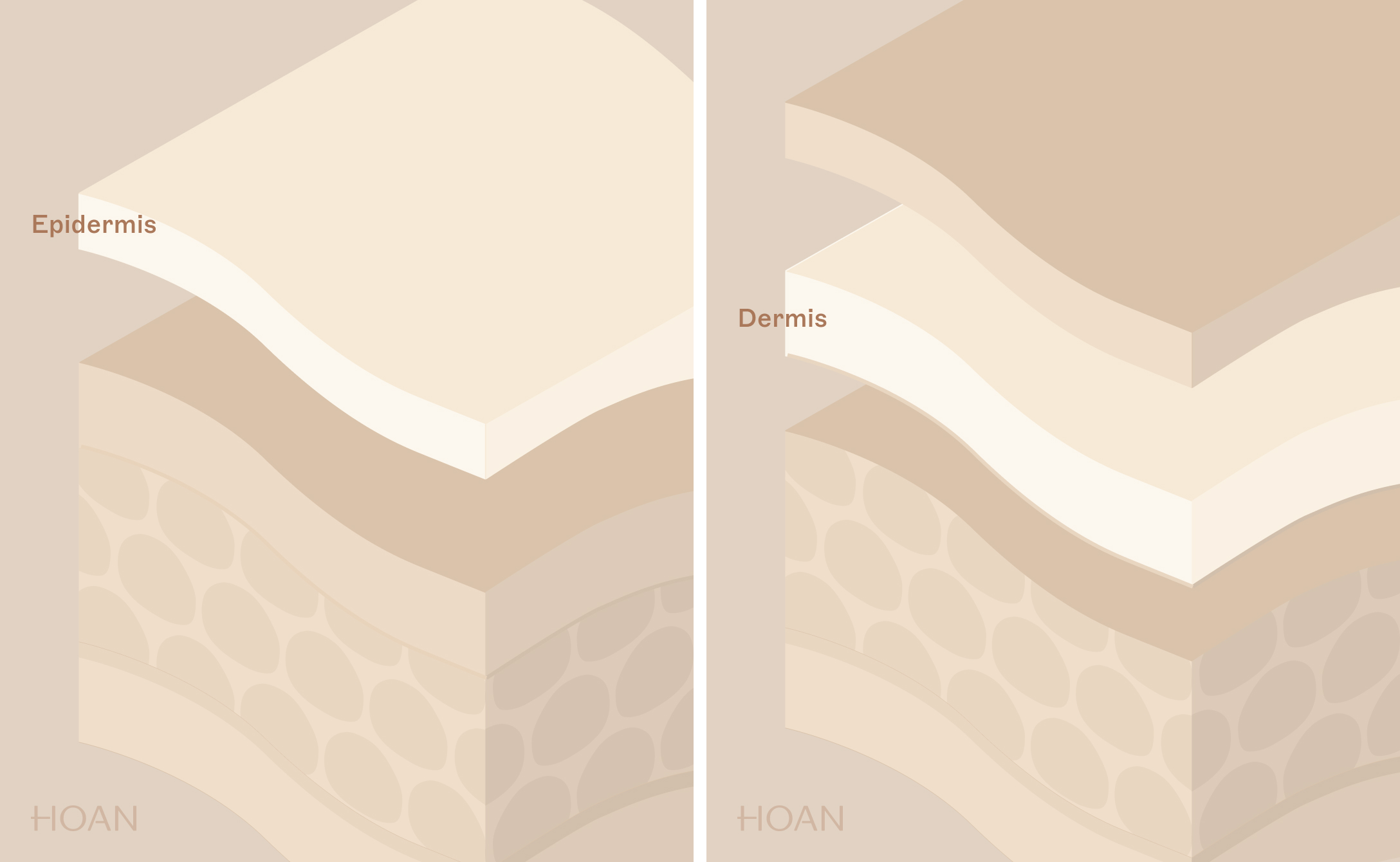
The epidermis is the layer most people notice first. It is closely related to skin texture, sensitivity, and overall surface condition. It is also the first layer that comes to mind when you feel that your skin looks rough, your makeup doesn’t work well, or your skin has become easily sensitive. Thus, the main goal is to stabilize the skin and minimize unnecessary stimulation.
However, the dermis forms the structural foundation of the skin and is closely related to density, firmness, and overall resilience. If you look at this layer together, you can often understand why the reactions are different even if the skin condition looks similar on the outside. When you have good skin on the outside but feels easily exhausted or slow to recover, you need to consider this background condition together.
Hoan Clinic distinguishes these two layers, but also says that they always interact.
The skin texture alone does not determine the impression of a face. The same face can give completely different look depending on the volume of the area and how the center of gravity of the face is balanced.
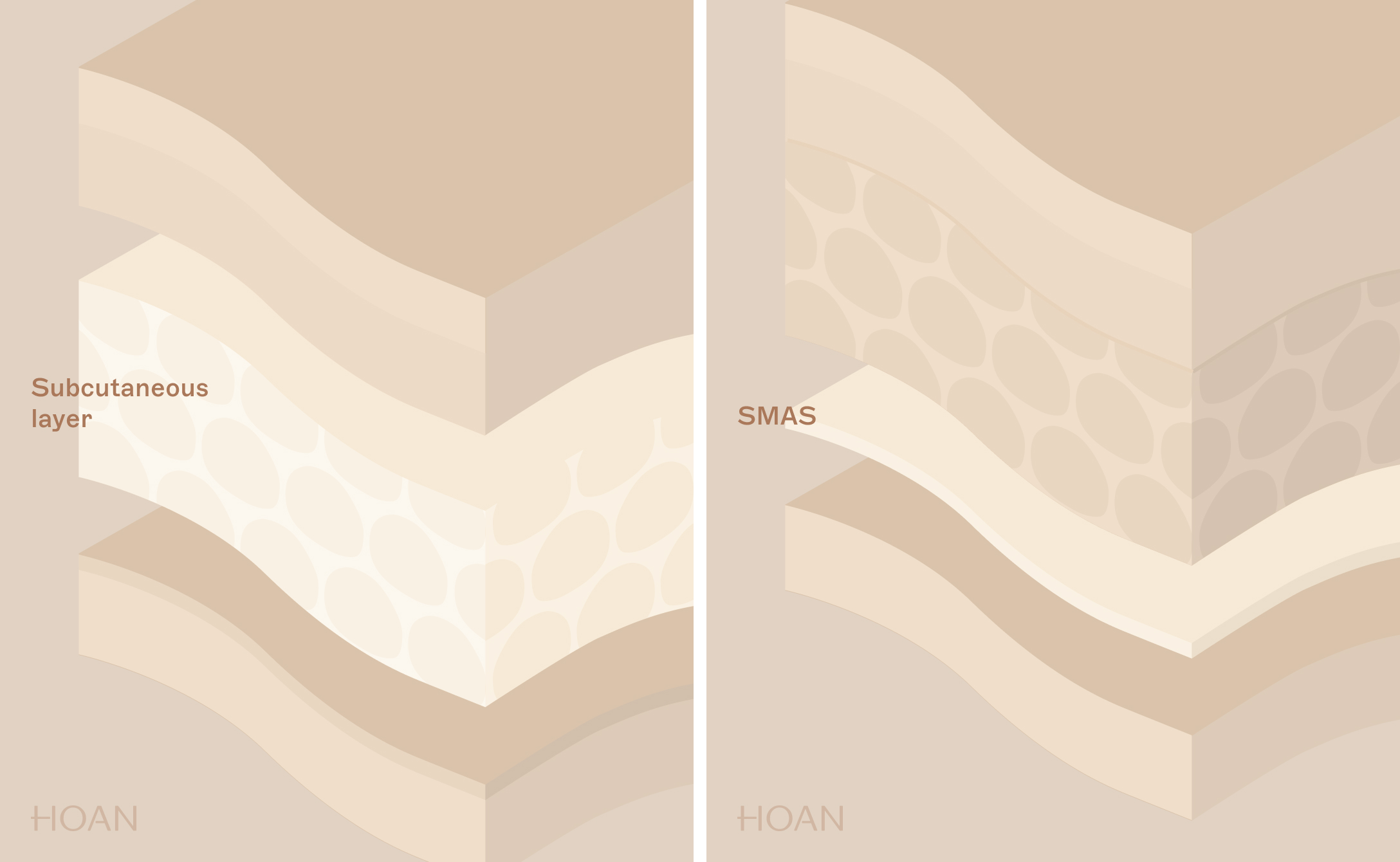
The subcutaneous fat layer plays a major role in facial contour and volume. When you look at this layer, you first think about whether you need to reduce fat, maintain it, or balance it in a different way.
However, right below it, the fascia (SMAS) layer provides structural support by connecting skin, fat, and muscle together. Changes related to sagging often cannot be explained by surface factors alone.
Even if we talk about changes in the same page, I think the overall impression will inevitably look different depending on which layer we approach with different purpose.
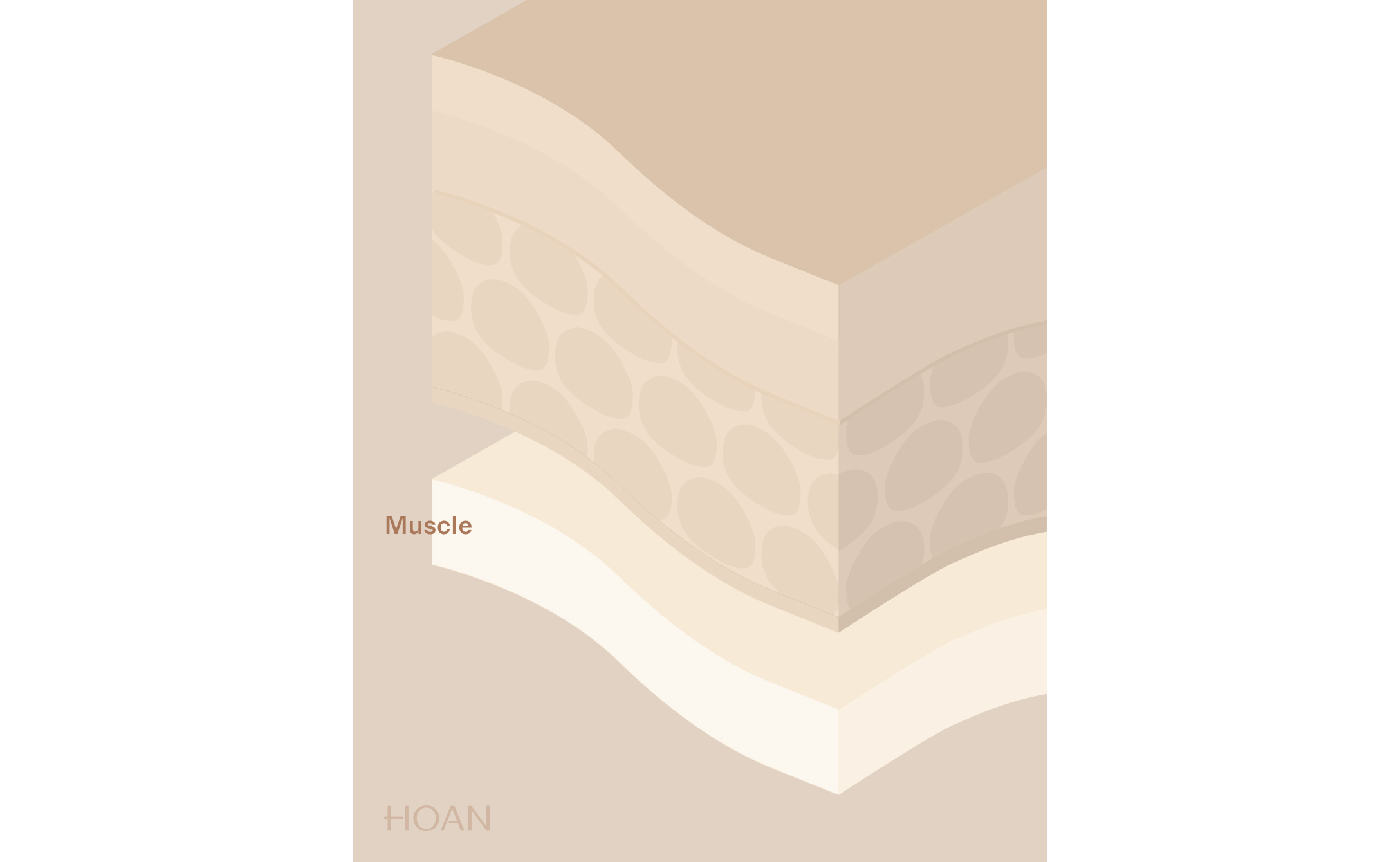
Finally, the lowest layer of the skin, the muscle layer is directly related to facial movement and expression. Patterns of muscle use, facial habits, and repetitive motion influence facial shape and wrinkle formation over time. Because interventions at this level can significantly affect expression, they require particularly careful decision.
If any porcedure goes too far, it can give the unnatural and stiffened facial impression. So the important thing is not to suppress the muscles, but to properly relieve the tension in the area. The most important point in the muscle layer is balancing your face to look less exhausted and more comfortable while keeping your facial expressions natural.
The reason why the results feel different, even with the same procedure, is that the skin is not a single side, but a multi-layered structure. This is why the approach needs to be different depending on the skin layer. Rather than applying one standardized method to all people, HOAN CLINIC first assess the condition of each layer of the skin and then define the best approach that is appropriate for each person. It can be seen as a criterion for reducing unnecessary options and finding acceptable flows for the skin.
I want to say that any procedure that works well for someone may not work for me, and ultimately, in order to make the best choice for my skin, understanding my current condition accurately is the key starting point.
I hope you have a comfortable and peaceful day today, both in your body and mind.
Hoan Clinic,
Saeah Lee